
By Daniel Rubin, LMHC, LPC – Transcend Counseling
In the early 2000s, most people still thought of pornography as something you had to seek out—DVDs, magazines, or late-night cable. Today, it’s the opposite. Porn doesn’t wait for you. It follows you.
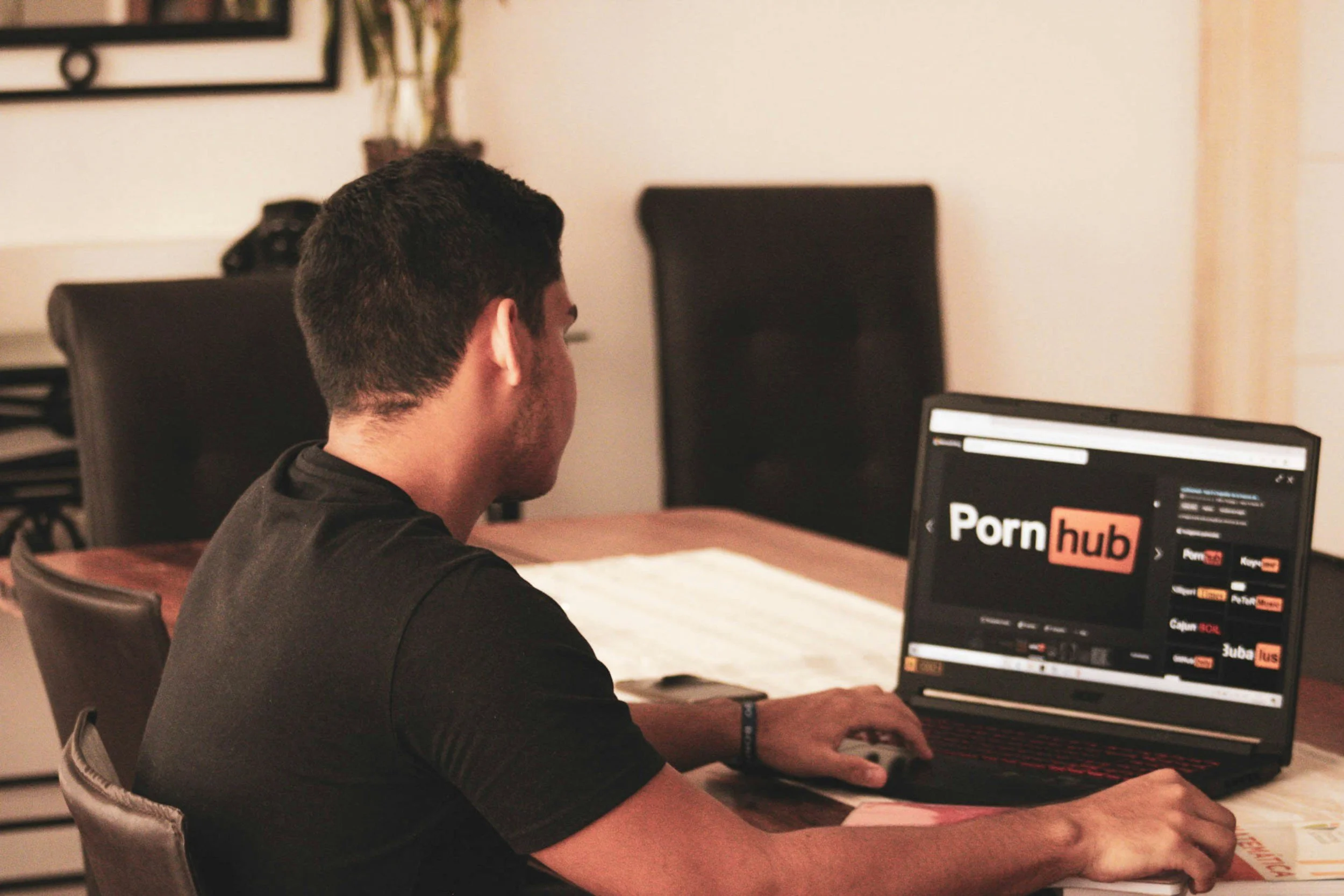
High-speed internet, smartphones, and endless streaming have turned porn into an on-demand, 24/7 option. For many men, especially high-performing professionals, that constant access has quietly shifted from “harmless stress relief” into something that feels compulsive, shameful, and out of control.
In my work with executives, entrepreneurs, and other driven men, I see a clear pattern: porn is no longer a side issue. For many, it’s the central way they cope with stress, loneliness, anxiety, and emotional disconnection.
This is not about moral judgment. It’s about what happens when the brain is flooded with unlimited stimulation—and how that can hijack your focus, relationships, and sense of self.
How Porn Changed After 2000: From Scarcity to Infinite Scroll
Three big shifts since the early 2000s have changed the landscape completely:
High-speed internet and streaming
Early internet porn was slow, clunky, and limited. As broadband became standard and streaming platforms exploded, porn became instant, high-definition, and endless.Smartphones and privacy
The launch of the iPhone in 2007 and the rise of smartphones made porn portable and private. You no longer needed a computer in a separate room; your entire library is in your pocket, a few taps away—at work, in bed, or on the road.Algorithms and escalation
Just like social media, many porn sites use recommendation systems that keep you clicking. Over time, people often escalate to more intense or novel content to get the same level of stimulation. That escalation can be deeply confusing and shame-inducing, especially when it no longer matches your real-life values or desires.
The end result? A generation of men who grew up with “always on” porn—often starting in adolescence—are now in their 30s, 40s, and 50s, wondering why their sex lives, motivation, and emotional connection feel flat or fractured.
When Does Porn Use Become a Problem?
Not everyone who watches porn has an addiction. The real question isn’t “Is porn bad?” but:
What is porn actually doing in your life?
Porn use becomes a problem when it starts to show up in these ways:
You tell yourself you’ll stop—but you don’t.
You plan to watch “for a few minutes,” and an hour disappears.
You feel shame, guilt, or self-disgust afterward, but nothing changes.
You choose porn over sleep, work, or meaningful connection.
You find it harder to get aroused with a real partner without porn or specific content.
You’re hiding your use—clearing history, hiding charges, lying about it.
You’re using porn to numb out from stress, anxiety, anger, loneliness, or boredom.
At that point, the issue isn’t just about sex. It’s about compulsion, avoidance, and emotional regulation. Porn becomes the primary way you cope—and that’s where it starts to cost you.
The Impact on the Brain, Relationships, and Performance
1. The Brain: Reward, Tolerance, and Numbness
Porn activates the brain’s reward system—especially dopamine. When that reward system is hit repeatedly with intense, novel, high-stimulation content, the brain adapts. Many men report:
Needing more extreme content over time
Feeling “flat,” bored, or restless without stimulation
Struggling to enjoy normal, everyday pleasure
For some, this can contribute to problems like difficulty maintaining arousal with a real partner or feeling emotionally numb in other areas of life.
2. Relationships: Secret Walls and Emotional Distance
For many partners, porn use isn’t just about the behavior—it’s about secrecy.
Hidden accounts and deleted histories erode trust
Porn becomes an easier, conflict-free escape than real intimacy
Difficult conversations get avoided; resentment quietly builds
Over time, a man may be physically present but emotionally checked out—investing more energy into a screen than into his relationship.
3. Performance: Focus, Motivation, and Self-Respect
High-performing men often tell themselves, “I’m successful, so this isn’t really a problem.” But internally, they notice:
Decreased focus and productivity, especially after late-night binges
Using porn as a “reward” that eventually becomes a default habit
A growing split between their public image and private behavior
That split is exhausting. It creates a quiet sense of fraudulence: If people really knew what I do when I’m alone…
Why Shame Keeps Men Stuck
One of the biggest obstacles to getting help isn’t the behavior—it’s the story you attach to it:
“I should be stronger than this.”
“If I can handle a company, I should be able to handle this.”
“If my partner knew how often I watch, they’d leave me.”
Shame convinces you that you must either hide it or white-knuckle it alone.
But white-knuckling fails because you’re fighting the behavior at the surface level while ignoring what drives it underneath: stress, unresolved emotions, loneliness, trauma, or a deep sense of not being “enough.”
The reality is simple: you’re not broken. Your current coping strategy stopped working—and now it’s costing you more than it’s giving you.
What Healing Actually Looks Like (It’s More Than Just “Quitting Porn”)
Effective treatment for porn addiction or compulsive use is not about perfection. It’s about reclaiming control and building a life you don’t need to escape from.
In therapy, we focus on:
Understanding the function of porn in your life
Is it stress relief? Comfort? Escape? Punishment? Reward? We identify the emotional and situational triggers, so you’re not powerless when they show up.Rewiring your habits and environment
We create practical strategies:Removing frictionless access
Setting boundaries around devices
Designing new routines for evenings, travel, and downtime
Regulating your nervous system
Many men use porn to regulate anxiety, anger, and overwhelm. We work on healthier tools: breathwork, grounding, movement, and concrete ways to come down from stress without reaching for a screen.Rebuilding intimacy and connection
For men in relationships, we address how to rebuild trust, communicate honestly, and move toward a sexual connection that feels present, mutual, and alive—not just performative.Reclaiming identity and self-respect
The goal is not to make you “perfect.” It’s to help you live in alignment with your values again—to feel congruent, grounded, and proud of how you show up in your own life.
You Don’t Have to Figure This Out Alone
If you’re reading this and thinking, This is me, you’re not the only one—and you’re not beyond help.
At Transcend Counseling, I work with men who are:
Successful on paper, but privately stuck in patterns they can’t talk about
Tired of living a double life
Ready to do the deeper work—not just a 30-day “detox” challenge
We’ll move beyond shame and quick fixes and into a structured, clinical, and highly personalized plan to help you:
Regain control over your behavior
Rebuild trust in yourself and your relationships
Create a life that doesn’t require constant escape
If You’re Ready to Start
If you’re ready to talk about your relationship with porn—without judgment, lectures, or moralizing—I’m here for real, practical help.
Website: transcendcounselingllc.com
Sessions: 50-minute individual sessions
Format: In-person (where applicable) and secure virtual sessions
Licensure: I’m licensed in Florida, Georgia, and South Carolina as a Licensed Mental Health Counselor and Licensed Professional Counselor.
You don’t have to keep this part of your life in the dark.
You can address it directly, with support, and build a life that actually feels like yours again.